
Under US GAAP, you accrue a warranty reserve at the point of sale when warranty losses are probable and reasonably estimable. The entry is straightforward: debit warranty expense, credit warranty liability. What makes it complicated in practice is choosing the right estimation method, splitting the liability between current and long-term, and keeping documentation tight enough to survive an audit.
The three ASC references every accountant needs to know:
- ASC 450 (Contingencies): The primary recognition framework. Accrue when a loss is probable and the amount is reasonably estimable. Deloitte’s DART guidance on product warranties makes clear that general, undifferentiated reserves are prohibited. Estimates must be portfolio-based.
- ASC 460 (Guarantees): Applies to written guarantees, including certain dealer-issued service contracts. Requires initial recognition at fair value.
- ASC 606 (Revenue from Contracts with Customers): Governs when a warranty is sold separately or provides a service beyond assurance. In that case, it is a distinct performance obligation, not a contingency.
Point-of-sale accrual entry:
- Debit: Warranty Expense
- Credit: Warranty Liability (current portion, claims expected within 12 months)
- Credit: Warranty Liability, Long-Term (noncurrent portion, claims expected beyond 12 months)
When a claim is settled:
- Debit: Warranty Liability
- Credit: Cash / Parts Inventory / Accrued Labor (as applicable)
Key Takeaways
Warranty reserve accounting under US GAAP requires accrual at the point of sale when losses are probable and estimable, with the liability split between current and noncurrent portions and supported by portfolio-based documentation.
| Point | Details |
|---|---|
| Recognize at point of sale | Accrue warranty expense when loss is probable and reasonably estimable under ASC 450, not when claims are paid. |
| Split current and noncurrent | Classify claims expected within 12 months as current; claims beyond 12 months as long-term on the balance sheet. |
| Use portfolio-based estimates | GAAP bars general reserves; base the estimate on units sold × failure rate × average cost per claim by vehicle class. |
| Review and adjust quarterly | Run a roll-forward each quarter; changes in estimate flow through warranty expense in the period identified. |
| Loturn for per-vehicle tracking | Loturn’s VIN-level cost capture and exportable roll-forward reports support audit-ready warranty reserve documentation. |
Table of Contents
- What a warranty reserve is and why it matters
- Warranty reserve accounting: recognition criteria and the US GAAP framework
- Practical estimation methods for calculating a warranty reserve
- Step-by-step warranty reserve calculation: a dealer example
- Journal entries, balance sheet presentation, and deferred tax effects
- Footnote disclosures and audit documentation
- How and when to update the warranty reserve
- When a warranty becomes a separate performance obligation under ASC 606
- How Loturn helps dealers track per-vehicle warranty reserves
- What most dealers get wrong about warranty reserves
- Loturn gives dealers a cleaner path to audit-ready warranty reserves
- Sources
- FAQ
What a warranty reserve is and why it matters
A warranty reserve is a liability recognized to match the cost of future warranty claims against the revenue from the sale that created the obligation. Without it, the income statement overstates profit in the sale period and understates it when claims arrive later.
Two types of warranties drive different accounting treatment:
- Assurance-type warranties promise the product meets agreed-upon specifications. They are accounted for as contingencies under ASC 450/460, not as revenue.
- Service-type (separately priced) warranties provide a service beyond basic assurance. These are performance obligations under ASC 606 and require revenue deferral and recognition over the warranty term.
The matching principle is the core reason the reserve exists. Recognizing warranty expense only when claims are paid violates matching and distorts gross margin. For a dealer selling vehicles with a warranty lasting more than one year, the repair costs will arrive over subsequent periods after the sale — but the revenue hit the books in Q3. The reserve bridges that gap.
Beyond the income statement, the reserve affects lender relationships. Covenant calculations based on net worth or current ratio can shift materially if a large warranty liability appears or disappears between periods. Academic research finds that transparent, data-backed reserves also function as a market signal, strengthening customer and lender confidence in the business.
Pro Tip: Segment your reserve by product line, vehicle class, or model year rather than maintaining a single company-wide pool. Segmented reserves are far easier to defend in an audit because each segment has its own claim history and defect rate.
Warranty reserve accounting: recognition criteria and the US GAAP framework
Recognition under US GAAP turns on two tests from ASC 450: the loss must be probable and the amount must be reasonably estimable. Both conditions must be met before you record anything.
Deloitte’s DART chapter on product warranties is explicit: if you cannot reasonably estimate the amount, accrual is precluded and you disclose the contingency in the footnotes instead. That is not a loophole — it is a temporary state that requires active monitoring until an estimate becomes possible.
Where each ASC topic applies:
- ASC 450: Standard assurance warranties bundled with a product sale. Accrue on a portfolio basis using historical experience.
- ASC 460: Written guarantees and certain service contracts. Requires fair-value recognition at inception, which can differ from the expected-loss approach under ASC 450.
- ASC 606: Warranties sold for a separate price, or that provide services beyond confirming the product works. Allocate a portion of the transaction price to the warranty and recognize it over the coverage period.
One important constraint: GAAP bars the creation of a general, company-wide reserve percentage applied to all sales without differentiation. The estimate must be grounded in a portfolio of similar transactions — same vehicle class, same supplier batch, same warranty term — with documented rationale for the defect rate and cost assumptions used.
Required footnote disclosures for public companies include:
- Accounting policy description
- Estimation methodology
- Tabular roll-forward of the warranty liability (beginning balance, new accruals, payments, changes in estimate, ending balance)
- Significant assumptions and any changes to them
PwC’s revenue guidance confirms that public companies are expected to present this tabular reconciliation, and auditors will test it against the underlying claim data.
Disclosure callout: Both Deloitte and PwC guidance require public companies to present a tabular roll-forward of the aggregate warranty liability in the footnotes, showing every movement between the opening and closing balance. Private companies should adopt the same practice — it is the single most effective way to reduce audit cycles on this estimate.
Practical estimation methods for calculating a warranty reserve
The right method depends on how much historical data you have and how homogeneous your product mix is. Four approaches cover most situations.
Loss-rate method (percent of sales)
Apply a historical warranty cost rate to current-period revenue. Simple and fast, but it blurs differences between vehicle classes or product lines. Best for businesses with a stable, homogeneous product mix and several years of claim history.
Per-unit method
Multiply units sold by expected failure rate by average cost per claim. This is the most common approach for dealers and manufacturers with item-level data. Corporate Finance Institute’s warranty expense guide describes this as the standard mechanics: units sold × expected defect rate × average cost per claim.
Expected-value method
Assign probabilities to multiple outcome scenarios (low, medium, high claim rates) and weight them. Useful when claim experience is volatile or when a new product has limited history. More defensible than a single-point estimate when the range of outcomes is wide.
Actuarial/cohort method
Group sales into cohorts by period, vehicle class, or supplier and track actual claim emergence over time. This is the most data-intensive approach but produces the most defensible reserve for multi-year warranties. For GAP and other dealer add-on products, actuarial practice treats the premium as earned over the loan term using accelerated patterns such as Rule-of-78s, with expected loss ratios that differ materially from standard product warranty assumptions.
Inputs every accountant should gather:
| Input | Description | Methods supported |
|---|---|---|
| Units sold by class | Count of vehicles or products sold, segmented by type | Per-unit, cohort, expected-value |
| Expected failure rate | Historical defect % per class; use industry benchmarks if internal data is limited | Per-unit, loss-rate |
| Average cost per claim | Parts + labor + sublet per repair event | Per-unit, expected-value |
| Claim timing profile | Distribution of claims over warranty term (months 1–24, etc.) | Cohort, current/noncurrent split |
| Warranty term by class | Coverage period in months per vehicle or product class | All methods |
| Actual claims paid YTD | Running total to compare against accrued reserve | Roll-forward, variance analysis |
Multi-year warranties: When the warranty period extends beyond 12 months, AccountingTools notes that GAAP requires splitting the liability into current (claims expected within 12 months) and noncurrent (claims expected beyond 12 months) portions. Many accounting systems do not perform this split automatically, so manual reclassification at each reporting date is common — and a frequent source of error.
Discounting the long-term portion is permitted but not required under ASC 450 for most product warranties. If you do discount, document the rate and methodology consistently.
Step-by-step warranty reserve calculation: a dealer example
Fact pattern: A used-vehicle dealer sells 150 vehicles in Q3. Based on historical data, the dealer segments the portfolio into two classes:
- Class A (sedans/SUVs): 100 units, 8% expected failure rate, $650 average repair cost, 18-month warranty
- Class B (trucks/vans): 50 units, 12% expected failure rate, $900 average repair cost, 18-month warranty
Reserve calculation:
Because the warranty term extends beyond 12 months, the dealer estimates that some claims will occur within the first 12 months and some beyond 12 months.
- Current portion: $10,600 × 60% = $6,360
- Noncurrent portion: $10,600 × 40% = $4,240
Journal entry at point of sale (Q3):
Dr. Warranty Expense                $10,600
    Cr. Warranty Liability – Current            $6,360
    Cr. Warranty Liability – Long-Term          $4,240
Journal entry when a Class A claim is settled (parts $420, labor $230):
Dr. Warranty Liability – Current    $650
    Cr. Parts Inventory                         $420
    Cr. Accrued Labor                           $230
Journal entry for a cash refund (full vehicle return under warranty):
Dr. Warranty Liability              $X
    Cr. Cash                                    $X
The current/noncurrent split must be reassessed at each balance sheet date as the claim timing profile shifts. AccountingTools flags this reclassification step as a common reporting error when systems lack native support for tracking claim timing by sale date.
Journal entries, balance sheet presentation, and deferred tax effects
Beyond the basic accrual and settlement entries, several transaction types require specific treatment.
Standard journal entry set:
- Accrual at sale: Dr. Warranty Expense / Cr. Warranty Liability (current and noncurrent as above)
- Claim settled with parts from inventory: Dr. Warranty Liability / Cr. Parts Inventory
- Claim settled with cash payment to customer: Dr. Warranty Liability / Cr. Cash
- Claim settled with third-party repair (sublet): Dr. Warranty Liability / Cr. Accounts Payable
- Insurance or supplier recovery: Dr. Receivable from Insurer (or Supplier) / Cr. Warranty Expense (or Warranty Liability, depending on timing)
- Change in estimate — reserve increase: Dr. Warranty Expense / Cr. Warranty Liability
- Change in estimate — reserve decrease: Dr. Warranty Liability / Cr. Warranty Expense
Balance sheet placement: The current portion of the warranty liability sits in current liabilities, typically below accounts payable. The noncurrent portion appears in long-term liabilities. Both must be labeled clearly — “Warranty Liability” or “Accrued Warranty Costs” — so auditors and lenders can identify them without digging through footnotes.
Income statement: Warranty expense typically flows through cost of goods sold or a separate “warranty expense” line within operating expenses, depending on the entity’s chart of accounts. Consistency matters more than the specific line — changing the classification between periods requires disclosure.
Deferred tax timing difference: GAAP recognizes warranty expense when the sale occurs. The IRS generally allows deduction only when claims are actually paid. This creates a temporary difference: a deferred tax asset equal to the warranty liability balance multiplied by the applicable tax rate. Record it as:
Dr. Deferred Tax Asset              $X
    Cr. Income Tax Expense (Benefit)            $X
Reverse the deferred tax asset as claims are paid and the tax deduction is realized.
Claim coding checklist to avoid double-counting:
- Assign a dedicated general ledger account code to warranty liability (separate from general accrued liabilities)
- Map repair order transaction codes in the DMS to the warranty liability account, not to operating expense
- Reconcile the warranty liability account monthly against open repair orders
- Flag supplier charge-backs and insurance recoveries as credits to the liability or expense, not as revenue
Footnote disclosures and audit documentation
Auditors testing a warranty reserve will ask for three things: the methodology, the data behind it, and evidence that management reviewed it. Having all three organized before fieldwork begins cuts audit time significantly.
Required footnote items:
- Description of the accounting policy (ASC 450 contingency, or ASC 606 performance obligation if applicable)
- Estimation methodology and key assumptions (failure rate, average cost, timing profile)
- Tabular roll-forward of the warranty liability for each period presented
- Description of any changes in estimate and their income statement effect
- Disclosure of loss contingencies where accrual is not yet possible but a loss is reasonably possible
Documentation auditors will request:
- Historical claim logs with repair dates, VINs, repair costs, and warranty terms
- Repair invoices and parts receipts supporting average cost assumptions
- Supplier or parts cost histories used to project future repair costs
- Actuarial memos or third-party analyses for complex, long-duration products
- Management’s written rationale for the chosen defect rate and any deviation from historical averages
Internal control points auditors will test:
- Who prepares the reserve calculation and who reviews it (segregation of duties)
- Whether the review is documented (signed-off spreadsheet, system report, or memo)
- How changes in estimate are approved and recorded
- Whether the current/noncurrent split is recalculated at each reporting date
Pro Tip: Prepare a one-page reserve support memo for each reporting period. It should state the method, the key inputs, the resulting reserve, and who approved it. Auditors who receive this memo on day one of fieldwork spend far less time on warranty testing — and ask far fewer follow-up questions.
How and when to update the warranty reserve
A warranty reserve is not a set-and-forget entry. Claim patterns shift with supplier changes, vehicle age, and repair cost inflation, and the reserve needs to keep pace.
Review frequency and triggers:
- Quarterly review is the standard for most dealers and manufacturers
- Immediate re-estimate is warranted when: a supplier changes a component, a new failure pattern emerges, repair costs shift materially, or a warranty term is modified by contract amendment
- Annual reviews alone are insufficient for businesses with high claim volume or short warranty terms
How to perform a roll-forward:
Compare the ending balance to the expected reserve based on current assumptions. A persistent gap between the two signals that the defect rate or cost assumption needs updating.
Treatment of changes in estimate: Under ASC 250, changes in accounting estimates are recorded prospectively — in the period the change is identified, through warranty expense. Retrospective restatement is appropriate only when the original estimate contained an error (not merely a change in circumstances). In practice, most warranty reserve adjustments are changes in estimate, not errors, and flow through the current-period income statement.
LegalClarity’s warranty liability guide confirms that when actual claims differ from estimates, the adjustment runs through warranty expense in the period identified, not as a prior-period correction.
When a warranty becomes a separate performance obligation under ASC 606
The assurance-versus-service distinction is the most consequential judgment call in warranty accounting, and contract language is where it usually gets decided.
The test: Is the warranty sold for a separate price, or does it provide a service beyond confirming the product meets specifications? PwC’s revenue guidance is clear: assurance-type warranties not sold separately are accounted for as contingencies under ASC 450/460. Warranties sold separately, or those that provide additional services, are performance obligations under ASC 606.
Fact patterns that push a warranty into ASC 606:
- The customer can purchase the warranty independently (separate line item, separate price)
- The warranty provides roadside assistance, loaner vehicles, or maintenance services beyond repair
- The warranty term significantly exceeds the coverage period of comparable assurance warranties in the market
- Contract language describes the warranty as a “service plan” or “maintenance agreement”
Fact patterns that keep a warranty in ASC 450/460:
- The warranty is bundled with the vehicle sale and cannot be purchased separately
- Coverage is limited to defects in materials or workmanship
- The term is consistent with industry norms for the product class
When ASC 606 applies: Allocate a portion of the transaction price to the warranty performance obligation using the standalone selling price. Recognize that allocated revenue over the warranty term as the performance obligation is satisfied. The expected costs of fulfilling the warranty are then expensed as incurred, not accrued upfront.
Practical note on contract language: Phrases like “we will repair or replace” point to assurance. Phrases like “we will provide maintenance, inspection, and repair services” point to a service obligation. Review your standard contract language with counsel if the distinction is unclear — the accounting treatment follows the substance of what is promised.
How Loturn helps dealers track per-vehicle warranty reserves
Per-vehicle cost capture is where warranty reserve accuracy starts. When every recon charge, transport cost, and parts expense is tagged to a specific VIN, the inputs for a per-unit reserve calculation are already in the system.
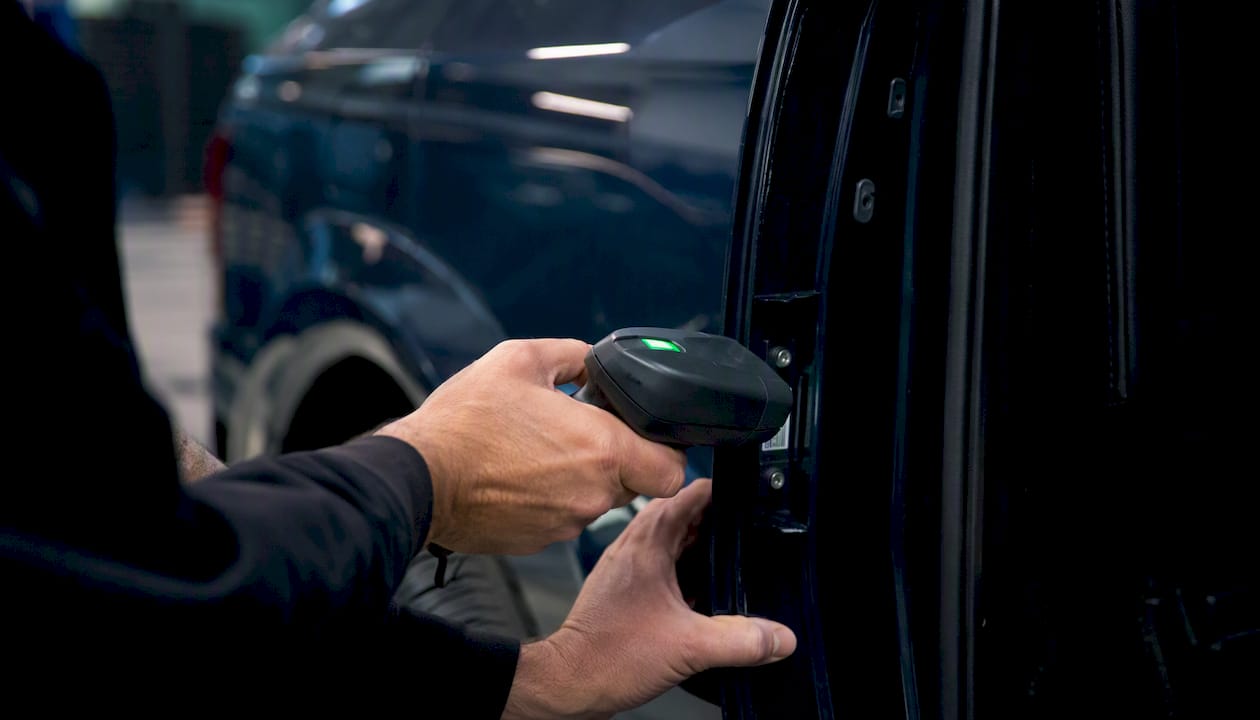
Loturn’s native dealer accounting assigns costs at the vehicle level from acquisition through sale, which means the data needed to build a cohort-based warranty estimate — vehicle class, purchase date, recon costs, and warranty term — is captured as a byproduct of normal operations rather than assembled manually at quarter-end.
Three concrete benefits for warranty reserve work:
- Accurate per-car reserves: VIN-level cost data supports a per-unit estimate rather than a blended company-wide rate, which GAAP requires and auditors prefer.
- Automated current/noncurrent split: Loturn tracks sale date and warranty term by vehicle, enabling the current/noncurrent classification to be calculated from actual data rather than estimated manually.
- Auditable roll-forward reports: Exportable transaction histories give auditors the claim-level detail they need to test the reserve without requiring the dealer to reconstruct records from paper files.
For dealers comparing their options, the dealer accounting software guide walks through what generic accounting packages miss when it comes to per-vehicle cost allocation.
Pro Tip: Tag warranty terms and any claim history at the VIN level from day one. When you need to build a cohort estimate six months later, the data is already sorted by vehicle class and sale date — the calculation takes minutes instead of hours.
What most dealers get wrong about warranty reserves
The most common mistake is the blanket reserve: a fixed percentage of revenue applied uniformly across all vehicles, all classes, all warranty terms. It is fast, it feels conservative, and it is exactly what GAAP prohibits. A general, undifferentiated reserve is not a defensible estimate — it is a placeholder, and auditors treat it as one.
The second mistake is ignoring the current/noncurrent split. A dealer with a 24-month warranty who books the entire liability as current is misrepresenting the balance sheet. Lenders reading that current ratio are working with bad data, and the error compounds every quarter until someone catches it.
The third mistake is infrequent adjustment. Dealers who review the reserve once a year and make a large catch-up adjustment create exactly the kind of income volatility that draws scrutiny. Frequent small adjustments — quarterly, based on actual claim data — keep the reserve accurate and the income statement smooth.
The deeper issue is that warranty accounting rewards specificity. The more granular the data (by VIN, by vehicle class, by supplier batch), the more defensible the estimate. That is not extra work for its own sake. It is the difference between a reserve that survives audit and one that generates a material weakness finding.
Conservative assumptions are appropriate, but they need to be supportable.
Loturn gives dealers a cleaner path to audit-ready warranty reserves
Tracking warranty reserves manually across a 100-vehicle inventory is where spreadsheets start to fail. Costs get missed, VINs get mixed up, and the current/noncurrent split becomes a quarterly guessing exercise.
Loturn is built for exactly this problem. Per-vehicle cost capture means every recon charge, transport fee, and parts expense is already assigned to the right VIN before you sit down to calculate the reserve. The native double-entry accounting uses an automotive chart of accounts, so warranty liability posts to the right place automatically. Roll-forward reports are exportable, giving your auditor the reconciliation they need without a manual rebuild.
Setup is fast, data migration is included, and the platform uses bank-level encryption. To see how it fits your dealership’s accounting process, explore Loturn’s accounting features or start a free trial at Loturn.
Sources
- 5.6 Product Warranties
- 8.3 Warranties
- Warranty accounting
- Warranty Expense - Overview, Recognition, How To Calculate
- Warranty Liability Accounting: Estimating and Recording Reserves - LegalClarity
- Reserving for Automobile Warranty and Other Long Duration Contracts—GAP & Residual Value
This article is general information, not a substitute for advice from a qualified financial advisor. Consult a qualified financial professional about your own circumstances before acting on anything here.
FAQ
How do you record a warranty reserve?
Debit warranty expense and credit warranty liability at the point of sale. Split the liability into current (claims expected within 12 months) and noncurrent (claims expected beyond 12 months) portions.
What is the journal entry for warranty accounting?
At sale: Dr. Warranty Expense / Cr. Warranty Liability. When a claim is settled: Dr. Warranty Liability / Cr. Cash, Parts Inventory, or Accrued Labor, depending on how the claim is paid.
Are warranties expensed or capitalized?
Assurance-type warranties are expensed at the point of sale through warranty expense or cost of goods sold. Separately priced warranties are deferred as a liability and recognized as revenue over the warranty term under ASC 606.
Is a warranty reserve an asset or a liability?
A warranty reserve is a liability. It represents the estimated future cost of honoring warranty obligations already incurred through product sales. The related deferred tax asset (arising from the timing difference between GAAP expense and tax deductibility) is an asset, but the reserve itself is not.
When should you adjust the warranty reserve?
Adjust the reserve in the period when actual claim experience or updated cost assumptions differ from the original estimate. The adjustment runs through warranty expense in the current period, not as a prior-period restatement, unless the original estimate contained an accounting error.