
Front-end gross equals sale price minus dealer cost, and dealer cost should include acquisition price plus any recon and transport you track to that VIN. Divide gross dollars by sale price and multiply by 100 to get your margin percentage. The math is simple; the accuracy problem almost always comes from sloppy or missing per-VIN cost data, not the formula itself.
TL;DR:
- Accurate front gross calculation depends on collecting and locking in precise dealer costs for each VIN before deal closure, including acquisition, recon, and transport.
- Dealer cost exclusions include marketing, rent, utilities, and general overhead, while acquisition, recon, and fees tied to the vehicle are necessary for accurate margin calculation.
- Small recon overruns or unexpected costs on a used vehicle can reduce gross margin by a full percentage point, emphasizing the importance of recon budgeting.
- Daily monitoring of per-VIN profit data helps identify and prevent cost leaks early, ensuring gross margins stay within targeted thresholds.
- Automating cost attachment to inventory improves gross accuracy and reduces reconciliation errors, but relies on disciplined, real-time data entry rather than manual updates.
Table of Contents
- What Is Front-End Gross Calculation?
- How Do You Calculate Front Gross Step by Step?
- Worked Examples: Two Front Gross Calculations
- What Counts as Dealer Cost, and What Doesn’t?
- Reading Your Gross Numbers: What the Percentage Actually Tells You
- How Can Dealers Improve Front-End Gross?
- Making Per-VIN Cost Tracking Actually Work
- What the Textbook Formula Misses
- Turn Your Gross Formula Into an Automatic Report
- Sources
- FAQ
What Is Front-End Gross Calculation?
Front-end gross is the profit a dealership makes on the vehicle itself, separate from financing, insurance, and aftermarket products sold on the back end. It answers one question: after you paid for the car and got it ready to sell, how much did the sale actually make you?
The two formulas that matter:
Gross dollars = Sale price − Dealer cost
Gross margin % = (Gross dollars ÷ Sale price) × 100
“Dealer cost” is not the same as your dealership’s overall operating expenses. Dealer cost is what you spent to acquire and prepare that specific vehicle: the purchase or trade allocation, reconditioning, transport, and any auction or acquisition fees tied to the VIN. Rent, advertising, and staff payroll are operating expenses that hit your income statement elsewhere. Investopedia’s definition of gross profit draws this same line at the company level: revenue minus cost of goods sold, with operating expenses excluded entirely.
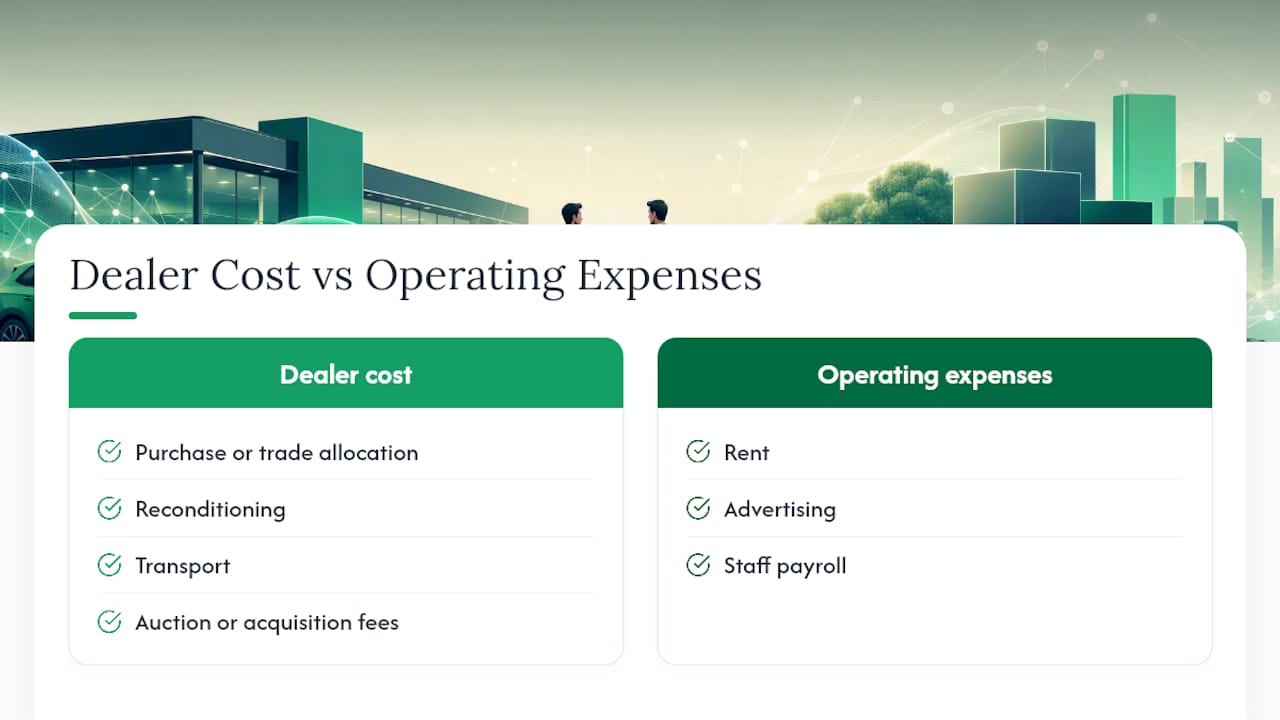
Front gross covers the vehicle sale. Back-end gross covers financing reserve, warranties, and F&I products. Total deal gross is the sum of both, and confusing the two is one of the fastest ways to misjudge a salesperson’s actual performance on a given unit.
How Do You Calculate Front Gross Step by Step?
Before you touch a calculator, gather every number tied to the VIN. Miss one and your gross is wrong, not approximately wrong, actually wrong, because front gross is a subtraction problem and subtraction has no tolerance for missing inputs.
Collect these in order:
- Sale price (the net figure after any dealer discount, not the sticker)
- Trade allowance, if a trade is part of the deal
- Acquisition price (auction bid, wholesale buy, or trade-in valuation)
- Reconditioning cost, itemized by vendor invoice where possible
- Transport cost to get the vehicle to your lot
- Dealer-installed options allocated to that VIN
- Auction or acquisition fees
- Allocated floor plan interest, if your dealership assigns it per unit
Once you have those, run the calculation: add every dealer cost item into one total, subtract that total from the sale price, and divide the result by the sale price to get margin percent. Then reconcile the number against your inventory system. If the VIN’s recorded cost in your DMS doesn’t match what you just added by hand, one of the two is wrong, and you need to find out which before you trust the gross figure at all.
Pro Tip: Lock inventory costs once reconditioning is complete, and resist the urge to hand-edit cost figures in the deal wrap-up screen. Editing costs directly in wrap-up without updating the inventory record is one of the most common ways dealers end up with a front gross number that looks fine on the deal sheet and doesn’t match the books a week later.
Worked Examples: Two Front Gross Calculations
Numbers make this concrete faster than any explanation.
Example A: Used car, straight retail sale
- Acquisition price: $14,200
- Reconditioning: $850
- Transport: $175
- Total dealer cost: $15,225
- Sale price: $18,995
- Front gross = $18,995 − $15,225 = $3,770
- Margin % = ($3,770 ÷ $18,995) × 100, which is a typical example of a front gross margin percentage.
Example B: Trade-assisted deal with dealer-installed options
- Acquisition price (trade allocation): $9,800
- Reconditioning: $1,100
- Dealer-installed options (allocated): $300
- Transport: $150
- Total dealer cost: $11,350
- Sale price: $13,995
- Front gross = $13,995 − $11,350 = $2,645
- Margin % = ($2,645 ÷ $13,995) × 100 = 18.9%
Now run it backward. Reverse-mode margin calculators solve for the sale price you’d need: dealer cost ÷ (1 − target margin), or $11,350 ÷ 0.80, which is the calculated sale price needed to hit a 20% margin target. That’s the number you’d need to hit on the sticker, before any negotiation room, to land at 20%.
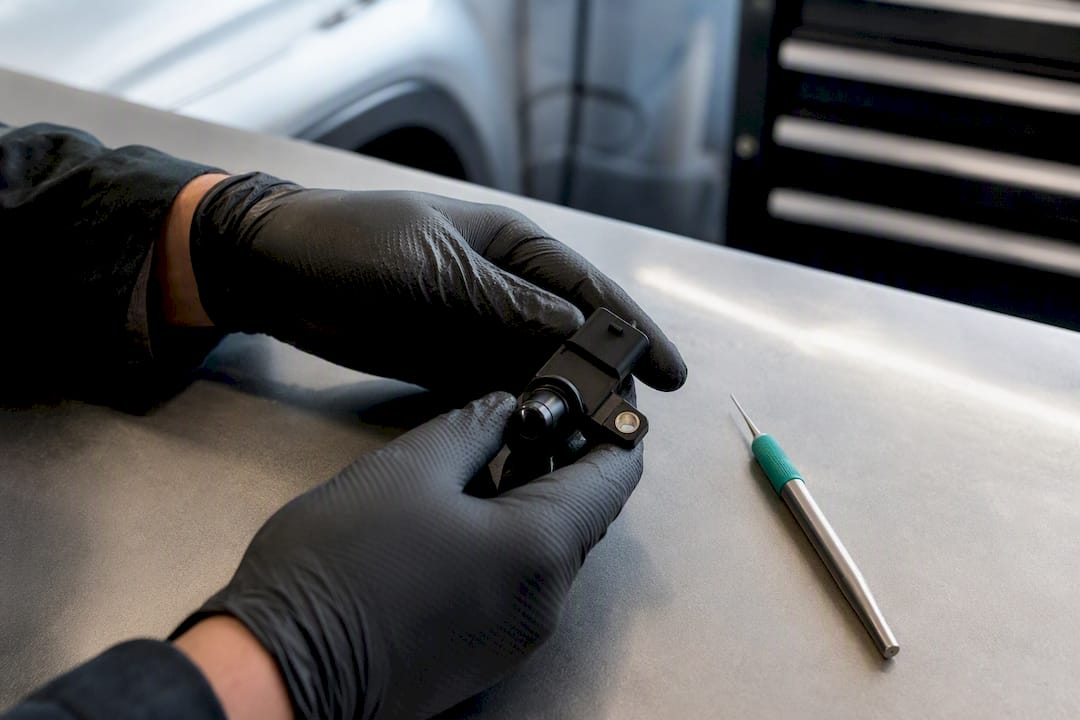
A $200 recon overrun on Example A drops gross and margin margins by a noticeable amount, demonstrating the sensitivity of front gross to recon costs. That’s not a rounding error. On a $19,000 car, a single unexpected sensor replacement or paint touch-up can shave a full point off margin, which is exactly why recon needs a budget and a ceiling before the vehicle hits the lot.
What Counts as Dealer Cost, and What Doesn’t?
Getting this wrong in either direction skews every gross figure your dealership reports.
Include in dealer cost:
- Acquisition price (auction, wholesale, or trade allocation)
- Transport and delivery fees to get the vehicle to your lot
- Reconditioning: parts, labor, detailing, inspections
- Auction fees and buy fees
- Dealer-installed options allocated to that specific VIN
Exclude from dealer cost:
- General advertising and marketing spend
- Rent, utilities, and facility costs
- Administrative payroll not tied to a specific vehicle
- Floor plan interest, unless your dealership specifically allocates it per unit
Wall Street Prep’s breakdown of gross profit reinforces the same boundary at the corporate level: cost of goods sold stays in the gross calculation, operating expenses stay out. Incentives and holdbacks deserve a specific rule too. If a manufacturer incentive reduces what you actually paid for the vehicle, subtract it from dealer cost before you calculate gross. If it’s a volume bonus tied to overall performance rather than that unit, keep it out and treat it as a separate revenue line.
Reading Your Gross Numbers: What the Percentage Actually Tells You
A dollar figure without a margin percentage hides information. A $3,000 gross on a $12,000 car (25%) and a $3,000 gross on a $30,000 car (10%) represent very different levels of pricing discipline, even though the dollar amount looks identical on a deal sheet.
- Used vehicles typically carry higher front margin percentages than new units, since new-car gross is often compressed by MSRP competition and manufacturer allocation rules
- Front gross and back gross should be reviewed together; a thin front gross with strong F&I attachment can still be a profitable deal overall
- Reprice or rework recon when a unit’s projected margin falls below your dealership’s floor, and treat repeated low-gross sales on a specific model or source as a signal to adjust your buying, not just your pricing
Front gross also feeds most commission plans directly, so an inflated or understated number doesn’t just distort your reporting. It pays a salesperson incorrectly.
How Can Dealers Improve Front-End Gross?
Small, disciplined changes at each stage of the vehicle’s life move gross more than any single pricing trick.
- Set a maximum per-VIN acquisition cost before you bid, and hold the line at auction even when a unit looks appealing
- Standardize recon packages by vehicle condition, get competing vendor bids quarterly, and set a real-time recon budget per unit so costs don’t drift
- Anchor pricing around documented value-add features, and confirm front gross at deal approval, not after the paperwork is signed
- Run daily per-VIN profit reports so a cost leak on one vehicle gets caught before it becomes a pattern across ten
Pro Tip: The dealerships with the tightest gross control review per-VIN reports every morning, not once a month. A leak caught on day two costs you one car. The same leak caught at month-end costs you every car it touched.
Making Per-VIN Cost Tracking Actually Work
Front gross is only as accurate as the cost data behind it, and that’s where most dealerships lose the thread. Acquisition invoices sit in one system, recon bills sit in a shop folder somewhere, and transport receipts get entered late or not at all. Per-VIN cost tracking fixes this by attaching every dollar to the vehicle it belongs to as soon as it’s spent, so the gross figure on your deal sheet matches your books without a reconciliation project.
A workable version of this looks like:
- Import acquisition and vendor invoices as they arrive, mapped to VIN
- Allocate recon and transport costs to that vehicle automatically rather than tracking them separately
- Use a desking calculator to confirm front gross before a salesperson gets sign-off
- Lock the vehicle’s cost record once recon is complete, so wrap-up screens can’t quietly override it
Recon and transport tracking tied directly to inventory removes the guesswork that turns an accurate formula into an inaccurate number.
What the Textbook Formula Misses
The gross formula itself is not the hard part. Anyone can subtract dealer cost from sale price. What separates dealerships that manage gross well from ones that guess at it is whether the cost side of that equation is trustworthy on the day the deal gets desked, not two weeks later when the accountant reconciles the month.
Most dealer training treats front gross as a reporting exercise, something you check after the sale to see how you did. That’s backward. Front gross should be a live number you’re watching while you’re still pricing the car, not a postmortem. The dealerships that get the most out of this metric build recon budgets and acquisition caps before they buy, not after they’re stuck with a unit that can’t hit margin.
The other overlooked point: a front gross number is only as good as its worst input. One missed transport invoice or one hand-edited wrap-up screen can quietly erase the value of every other correct entry in your system. Precision matters more than sophistication here. A dealership with a basic spreadsheet and disciplined per-VIN entry will out-report one running expensive software with sloppy data habits.
Prioritize the plumbing before the formula. Get acquisition, recon, and transport costs attached to the VIN the moment they happen, and the gross calculation basically takes care of itself.
— Eric Dosset
Turn Your Gross Formula Into an Automatic Report
Every calculation in this guide depends on cost data landing on the right VIN at the right time, and that’s the part most dealerships still do by hand in spreadsheets or sticky notes on a deal jacket. Loturn’s dealer accounting builds per-car costing into the books from the start: acquisition, recon, and transport attach to the vehicle automatically, so front gross shows up correct the moment a deal gets desked instead of after month-end reconciliation.
Setup includes data import assistance from your current system and encryption on your dealership’s financial data, so switching over doesn’t mean re-entering months of inventory history by hand. If you’re tired of guessing at margin until the accountant closes the month, start a trial and see what your per-car profit actually looks like on today’s inventory.
Sources
FAQ
What does front-end gross mean?
Front-end gross is the profit made on the vehicle sale itself: sale price minus dealer cost, which includes acquisition price plus any recon, transport, and fees tracked to that VIN. It excludes financing and F&I income, which fall under back-end gross.
How do you calculate the gross formula?
Gross dollars equal sale price minus dealer cost, and gross margin percentage equals gross dollars divided by sale price, multiplied by 100. Standard gross profit accounting uses this same subtraction logic at the company level, just applied here to a single vehicle.
How much does a car salesman make off a $20,000 car?
It depends entirely on the front gross and the dealership’s commission plan, since pay is typically a percentage of gross rather than a percentage of sale price. A $20,000 car with a $2,500 front gross and a 25% commission plan would generate roughly $625 in commission, though plans vary widely by dealership and by new versus used inventory.
How do you beat a car salesman at his own game?
Knowing the dealer cost side of the equation is the buyer’s real leverage, since sale price minus dealer cost is exactly what determines the salesperson’s incentive to negotiate. On the dealership side, the fix isn’t hiding numbers. It’s pricing accurately from real per-VIN costs so gross margin holds up regardless of how hard a buyer pushes.
What’s the difference between front gross and back gross?
Front gross covers profit from the vehicle sale itself, while back gross covers financing reserve, warranties, and F&I products sold alongside the deal. Total deal gross adds both together, and a thin front gross can still support a strong overall deal if back-end attachment is solid.